Some posts in Facebook become an actual book, like this one.
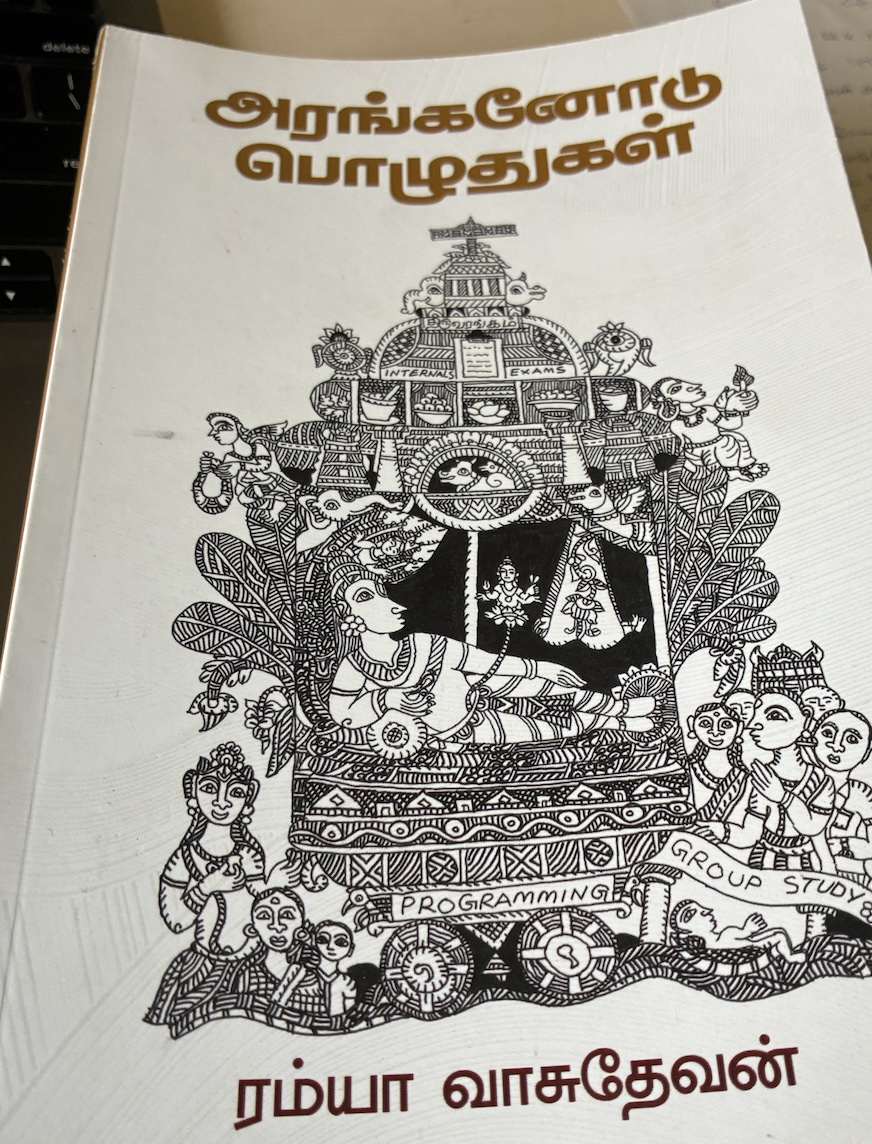
‘My time with Rangan’ / ‘Times alongside Rangan’ / ‘Me-time with Rangan’ – any one of these could be considered as a heading for a review of the Tamil books by name ‘அரங்கனோடு பொழுதுகள்’ by author Ramya Vasudevan. For, in the book, the author explains her association with Sri Ranganatha Swami of Sri Rangam in such vivid detail that you begin to feel any one of the above topics would suit this review and the book.
Ramya Vasudevan, a Sri Rangam native, reminisces her childhood days. Unlike the most popular ‘Sri Rangaththu Devathaikal’ by Sujatha, Ramya talks about her Sri Rangam not from the town’s perspective but from her desire to explain the details of the different aspects of Sri Rangam with Sri Ranganatha as the epicentre.
Each chapter begins with a personal anecdote and takes us to some incident of the past – some dating back to 1500 years. This model of story telling is a novel attempt to garner reader’s attention and then dwell into history. This covers episodes from the lives of Sri Ramanujacharya, Swami Vedanta Desika, Manavaala Maamuni, Nambillai, Kooraththaazwar, Vaduga Nambi and the list goes on to cover the entire gamut of the Sri Vaishnava Acharya lineage.
While focusing on the gurus of the past, Ramya keeps us entertained with history and some intermittent comical quips on her daily mundane life, trying to bring in a balance in the minds of the reader, lest the narration should seem over-loaded. This tactic works, in most episodes.
The Sri Vaishnava slang, the choicest terms used by the Iyengar Sri Vaishnavas, the temple lingo et al are covered in complete detail as an appendix. This should serve as a reckoner for those not familiar with the etymology.
Artist Narendra Babu’s art words are exemplary.
A worthy read for someone wanting to know about Sri Rangam and its nucleus, Sri Ranganatha and His hoary history.
What stand out in the book :
1. Lucid writing style
2. Interesting narration based story telling
3. Contemporary –> History transition
4. References to historical and literary items
5. Azhwar Pasurams
Scope for 2nd edition :
1. Tight editing to make the narration sharper
2. Chapters to be arranged in chronological order of history
3. Relevant timelines for each acharya
4. An Acharya-Tree with their lifetime markers
I have written this review intentionally in English so that the book:
1. reaches a wider audience
2. gets picked up for translation into other languages
Book can be purchased here.


Leave a comment